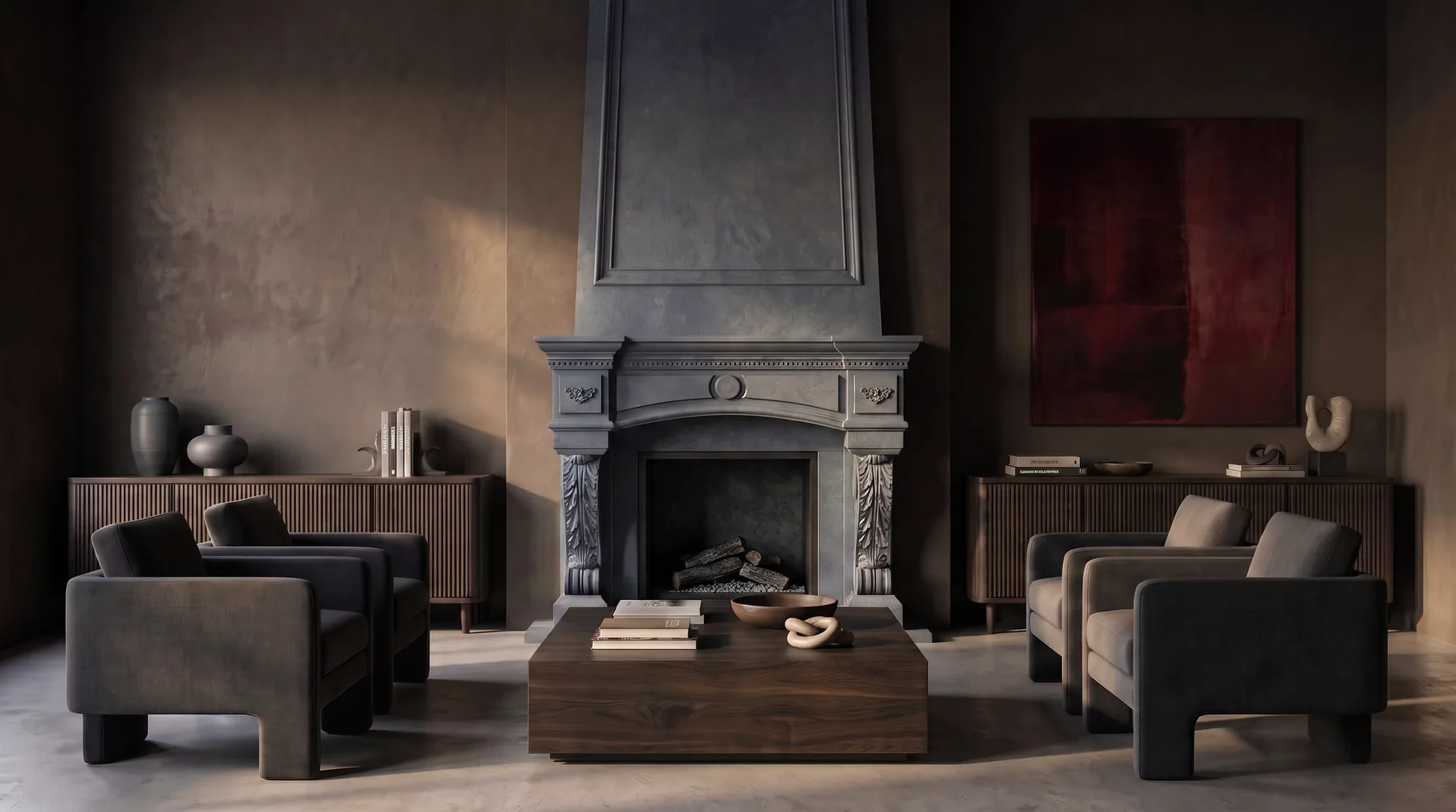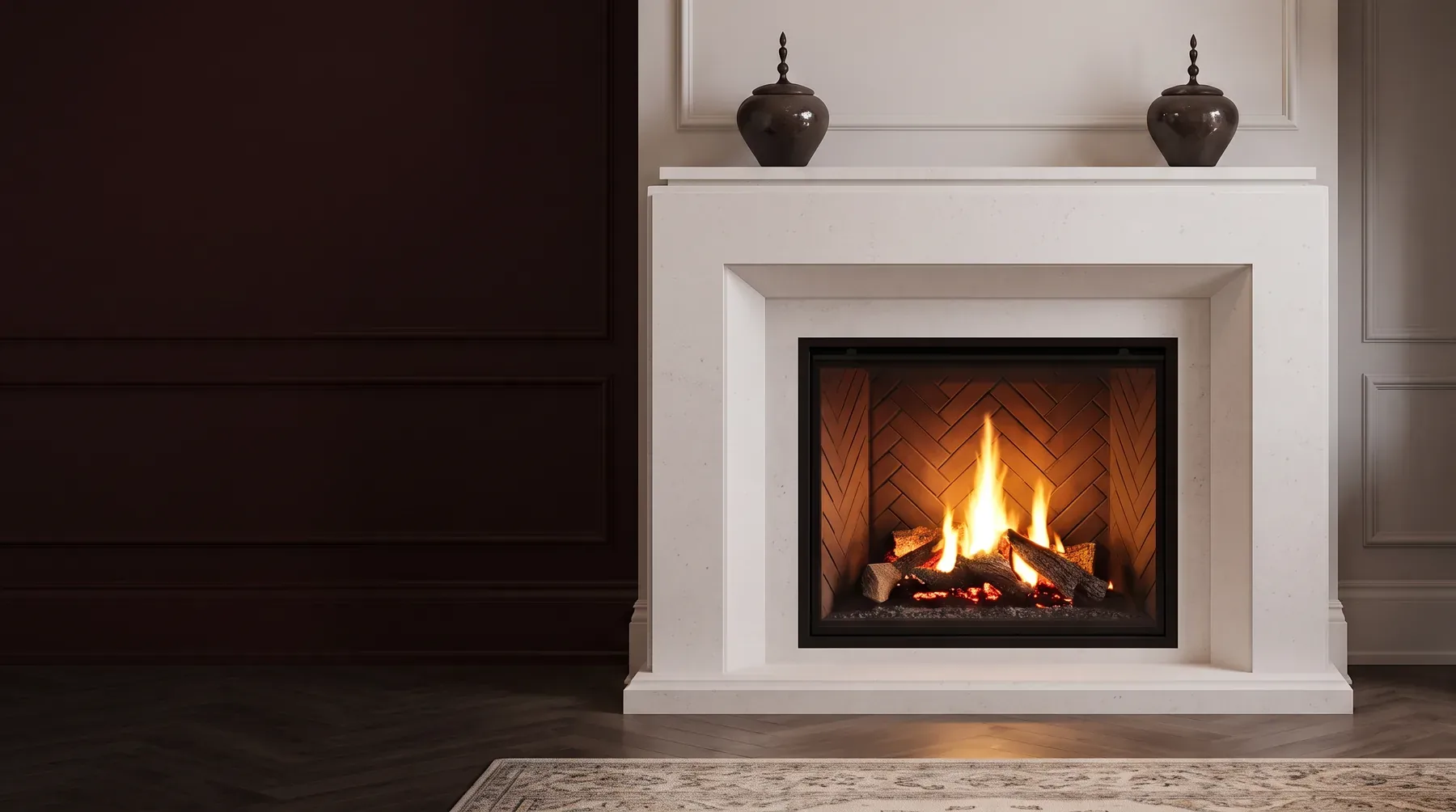
Cast Stone vs. Marble Fireplace Mantels
When homeowners across Toronto and the GTA start planning a new fireplace mantel — some call it a fireplace surround, others a hearth — the choice usually comes down to two materials: quarried marble or cast stone.
Both are elegant, both are durable, and both can look spectacular — but they behave very differently in design, installation and budget. Having handcrafted cast stone mantels since 1998, here is our honest comparison.
| Cast stone | Marble | |
|---|---|---|
| Design freedom | Cast in a mold — virtually any profile, from deep classical carving to crisp modern linear. | Cut from a quarried slab — size, profile and carving depth limited by the block. |
| Over existing brick | Adjustable over-mantels fit directly over brick or masonry. No demolition. | Generally needs a flat, prepared substrate and exact site conditions. |
| Installation | Engineered sections sized for real doorways and stairs, installed by our own team. | Heavy slab handling and less forgiving tolerances. |
| Heat and fire | Fire-resistant, zero-clearance safe, and does not crack with heat. | Durable, but can crack with heat and is sensitive to etching and staining. |
| Repairs | Colour runs through the material; a chipped piece can usually be repaired or re-finished. | Repairs to a damaged slab are difficult. |
| Cost | Considerably more attainable than equivalent custom-carved marble, especially for detailed or oversized designs. | Carries the quarried-slab premium, which rises sharply with intricate work. |
Weight and installation
A cast stone mantel is produced as a set of engineered pieces sized for real doorways, stairs and living rooms, and our own team installs it. Marble surrounds involve heavy slab handling and less forgiving tolerances. Because we design, make and install everything ourselves, fit issues get solved in our workshop — not discovered on installation day. Over an existing fireplace this is where cast stone pulls decisively ahead: our over-mantels are adjustable and engineered to fit directly over brick or masonry with no demolition, while a marble surround generally requires a flat, prepared substrate and exact site conditions. If you are covering a dated 1970s brick fireplace, cast stone is usually the far simpler path.

Durability and fire safety
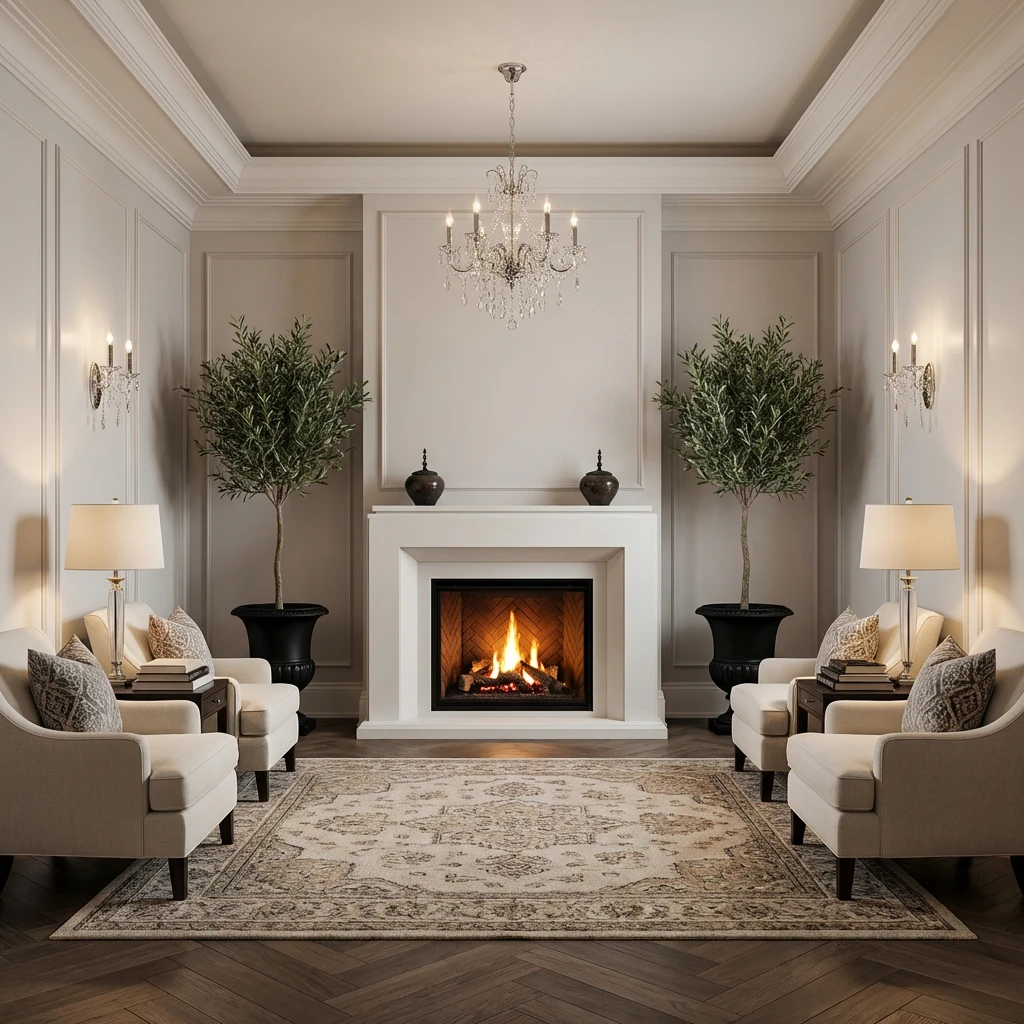
Cast stone is fire-resistant and offers zero-clearance safety around the firebox — and unlike marble, it does not crack with heat. It also does not stain the way polished marble can, and its colour runs through the material. Marble is durable too, but it can crack with heat and is sensitive to etching and staining, and repairs to a damaged slab are difficult. A chipped cast stone piece can typically be repaired or re-finished.
Every fireplace we build is custom, so pricing is quoted individually — but as a rule, a custom cast stone mantel is considerably more attainable than an equivalent custom-carved marble one. You get the carved-stone look and permanence without the quarried-slab premium.
The honest case for marble
Marble's natural veining is genuinely unique — no two slabs are alike, and for some interiors that one-of-a-kind figuring is the whole point. If your heart is set on book-matched veining as the feature of the room, marble deserves a look. For nearly everything else — design flexibility, renovation-friendliness, fire performance and value — cast stone is the material we have built our reputation on.
The best way to decide is to see the work. Browse the mantel gallery — over fifty installed pieces across Toronto and the GTA — or read how our mantels are made. If you are covering an existing brick fireplace, that has its own guide. Send us a photo of your fireplace and the look you are after, and Rafi will call you within one business day with straight answers.